What Modern Cybersecurity Should Include in 2026
Modern cybersecurity has to do more than lock down an office network. It must protect your people wherever they work, guard your information wherever it travels, and control how AI tools reach into your systems and data.
If you haven’t ever thought about the connection between security and AI, and the way your people work today, it’s time to think about that now. Safely leveraging modern technology depends on a security foundation that’s ready for it. And keeping IT systems and information protected no longer means defending a defined network perimeter.
This article covers what a modern cybersecurity strategy should include, how AI adds to those requirements, and why the provider who secures your environment should also be the one guiding your adoption of AI.
Table of Contents
How can I know if we’re keeping up with cybersecurity?
If there’s a disconnect between how your business operates and how cybersecurity works, dangerous gaps in protection emerge.
Modern work has fundamentally changed, but in many cases, IT security hasn’t kept up. Work now happens anywhere, anytime, with information flowing constantly between people, devices, and locations — not employees always at their desks, with data on servers, and work confined to business hours. At XPERTECHS, our best practices for cybersecurity are designed to match this reality.
What does that reality look like? Your accounting manager logs in at 9 PM Thursday to process vendor invoices before month-end closes. Your construction superintendent uploads project photos from the job site and updates schedules on his tablet. Your legal team collaborates on case files with attorneys across three time zones, sharing sensitive documents through cloud platforms.
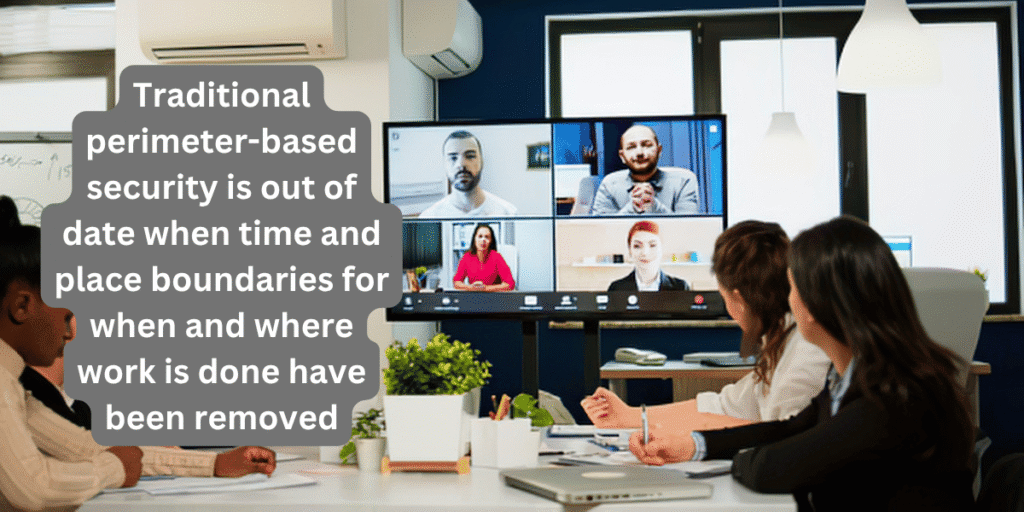
Time and place boundaries have been removed
Consider this scenario: an employee downloads project files to work on at home, then shares them with a subcontractor via email. Later, they access the same files from a coffee shop while traveling to meet a client. Conventional security monitors your office network but has no visibility into where that data went, who has copies now, or whether those access points were secure.
Or consider this: your employee’s account gets compromised at 8 PM Saturday. Traditional security monitoring sends an alert that waits for someone to respond Monday morning. By then, cybercriminals have had an entire weekend to access sensitive data, change authentication settings, and establish ongoing access to your systems.
AI adds to what your security has to handle. Cybercriminals use it to make their attacks faster and more convincing. And the AI your own team adopts brings new risks because of its access to your systems and data.
How XPERTECHS Approaches Cybersecurity
hese scenarios reveal why cybersecurity had to evolve. At XPERTECHS, our approach is a cybersecurity strategy built around how your business actually works — distributed teams, mobile data, and flexible schedules — delivered as part of Managed Intelligence. We act as a strategic partner who understands your operations, not just a provider who maintains systems.
Instead of simply monitoring systems and sending alerts, our approach provides immediate threat containment, data protection that travels with information, and security that accounts for the possibility that people will click things they shouldn’t, share information accidentally, and make other security mistakes.
We also understand the importance of security as the foundation for AI. The AI you adopt reaches into your systems and data, so it can only be leveraged safely in an environment you can see and control. As a Managed Intelligence Provider, we manage your security and guide your AI and automation at the same time, so the two are built together.
Three core functions of modern cybersecurity
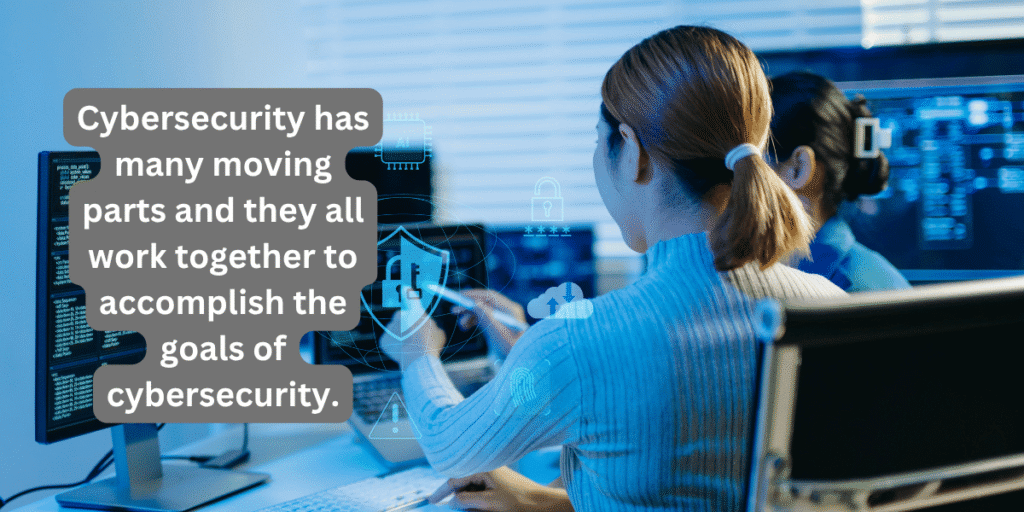
Cybersecurity has many moving parts — new threats, changing work patterns, evolving tools, plus compliance requirements, software selection, policies, and procedures. They all work together to accomplish three main functions.
1. Protect Identities and Devices Wherever They Are
Without a set network perimeter, you must secure identities and devices wherever they are.
This requires 24/7 Managed Detection and Response (MDR) that goes beyond traditional monitoring. When the system detects unusual activity — like an account logging in from a new location — it can be configured to immediately lock down the account first, then alert the security team. As attackers use AI to launch faster, more convincing assaults, that speed of response matters more than ever.
It’s better to have someone locked out for a few hours due to a false positive than to make a real security incident run wait for a response until business hours.
2. Protect information wherever it goes
Documents get downloaded, emailed, shared with AI platforms, and accessed from multiple locations. Security that only protects information where it’s stored can’t protect information as it travels.
This requires embedded data protection like Microsoft Purview that encrypts files with security controls that stay with the document wherever it goes.
With data loss protection measures in place, if someone leaves your company after downloading files, they won’t be able to access them, because the encryption requires active authentication. The same protection prevents unauthorized recipients from opening accidentally shared documents.
3. Equip your people to protect accounts and data
People will click suspicious links and share information inappropriately — it’s human nature. But a comprehensive security strategy equips people to be your first line of defense.
This requires ongoing cybersecurity awareness training combined with systems that immediately contain threats when mistakes happen. It’s better to prevent an intrusion than to detect it after the fact, but you need both layers of protection.
The goal is to build cybersecurity literacy and create a culture where security becomes second nature, not an afterthought.
How do you safely adopt AI?
Protecting identities, protecting data, and equipping your people are part of the kind of IT foundation needed to safely utilize AI technologies. AI reaches into your systems and data, so it takes on whatever state your security is already in. When you have a solid, secure foundation, AI is an asset. On a weak one, it exposes the gaps that were already there.
Adopting AI then brings its own decisions: which tools to trust, and what they’re allowed to access. A tool that runs inside your Microsoft 365 environment enforces the permissions and protections you already have. Enterprise versions of tools like ChatGPT and Claude can be used safely too, under the right agreement. A bigger risk is when employees use free, personal accounts, where your data leaves your control the moment it’s pasted in.
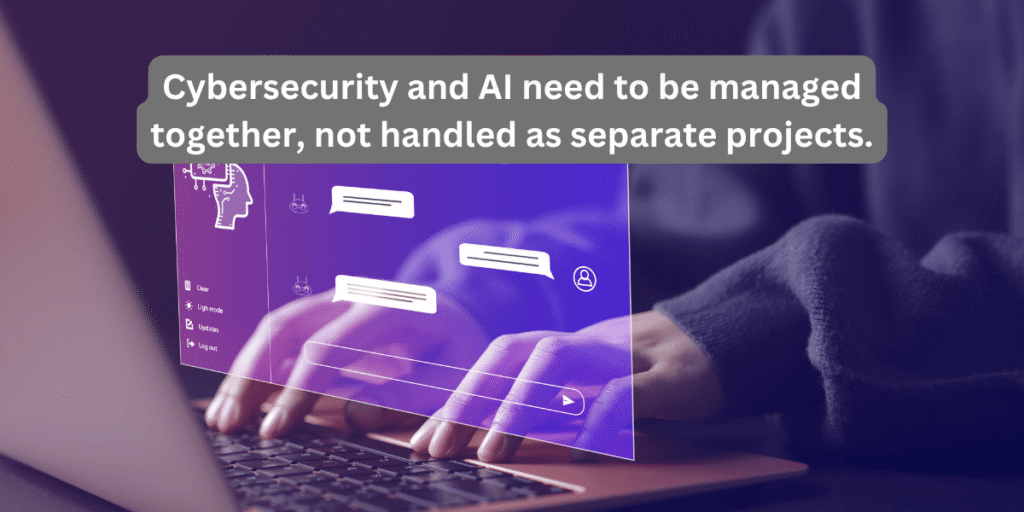
This is why security and AI have to be managed together, not handled as separate projects. At XPERTECHS, we manage both at once, keeping your security foundation current as threats change, and guiding your AI as it grows, so the two move in step instead of drifting apart.
What’s the ROI of cybersecurity?
When you protect identities everywhere, safeguard information as it travels, and equip people with security literacy, cybersecurity provides comprehensive risk management that enables confident business operations.
What’s more, a strong security foundation lets you confidently adopt AI, automation, cloud collaboration, and flexible work arrangements that improve operational efficiency. While competitors deal with security incidents and compliance gaps, and get inconsistent results with AI and automation, you can focus on growth.
XPERTECHS designs cybersecurity for how you work today
Modern cybersecurity is built for how you work today and for what you’ll ask of AI next, not for how businesses operated just a few years ago. At XPERTECHS, we combine security technology with an understanding of your operations to create protection that matches how you work and enables your adoption of modern AI and automation technology. As a Managed Intelligence Provider, we manage your security and guide your AI and automation together.
Does your security match how your business operates?
Get in touch to schedule a cybersecurity strategy consultation.
Related: Managed Cybersecurity Services
Frequently asked questions about modern cybersecurity
How is modern cybersecurity different from traditional perimeter-based security?
Most security is designed for office-based work with clear network boundaries. Modern cybersecurity is built for how work happens now with distributed teams, mobile information, and flexible schedules. It protects identities and data wherever they go instead of trying to secure a perimeter that no longer exists.
Why is 24/7 monitoring necessary if we have good security tools?
Security tools detect threats, but immediate response prevents small incidents from becoming major breaches. Cybercriminals often attack outside business hours when response is delayed. Managed detection and response provides immediate threat containment regardless of timing.
What makes data protection different from regular file security?
Traditional file security protects where information is stored. Modern data protection travels with information wherever it goes. Even if sensitive documents get downloaded, emailed inappropriately, or shared with unauthorized recipients, the embedded encryption prevents access without proper authentication.
How do you handle the reality that employees will make security mistakes?
We assume human error will happen and focus on immediate containment when it does. Along with training people to avoid mistakes, our security systems detect suspicious activity that results from human error and contain threats within minutes. The goal is to keep small mistakes from becoming business disasters.
Does adopting AI change our security requirements?
Yes. AI tools read and act on your data, so how well you’ve secured your environment determines how safely you can use them. From there, it comes down to which tools you trust, what data each can access, and what your people can do with them.
What business outcomes should we expect from strong cybersecurity?
Strong cybersecurity enables confident adoption of growth-driving technologies like AI and cloud collaboration. You’ll see fewer security-related disruptions, stronger protection for business-critical processes, and the advantages that come from a better security posture.